


惊天解密
Tibetan medical thangkas draw global spotlight at symposium in Xizang_我的网站

A | 中新社广西玉林8月23日电 题:逐梦十年 台青兄弟追着稻浪跑遍半个大陆 作者 蒋雪林 许耀艺 八月的广西玉林,晚稻插秧已近尾声。
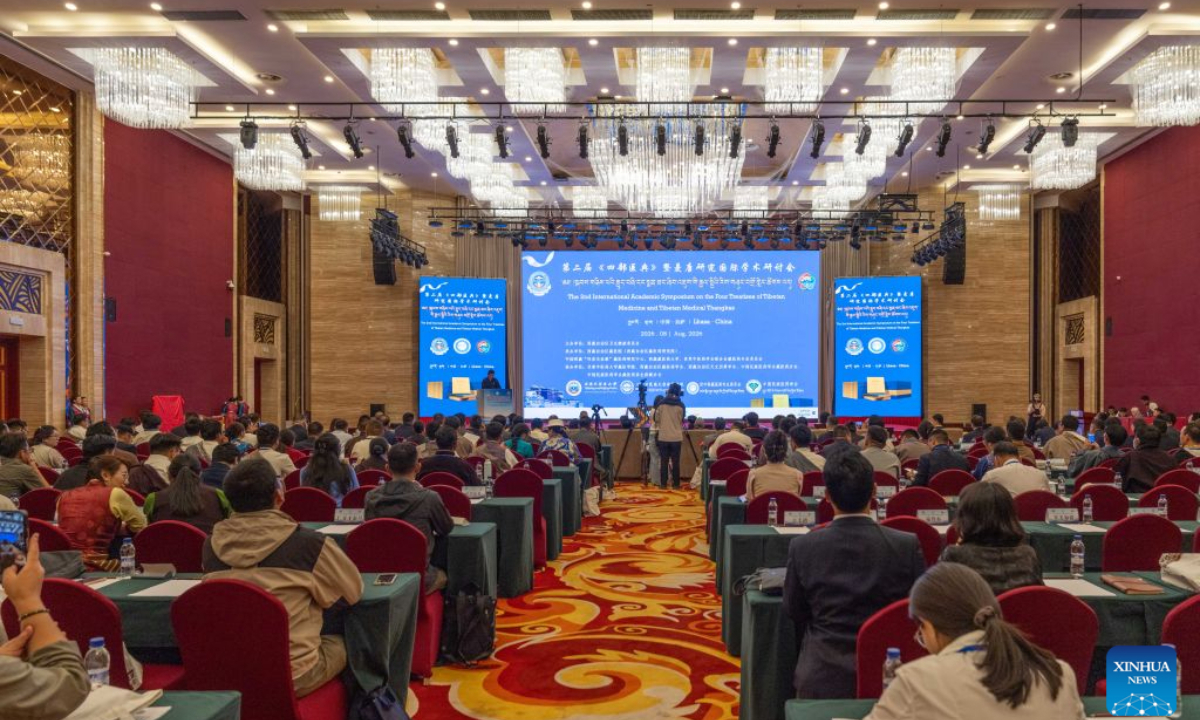
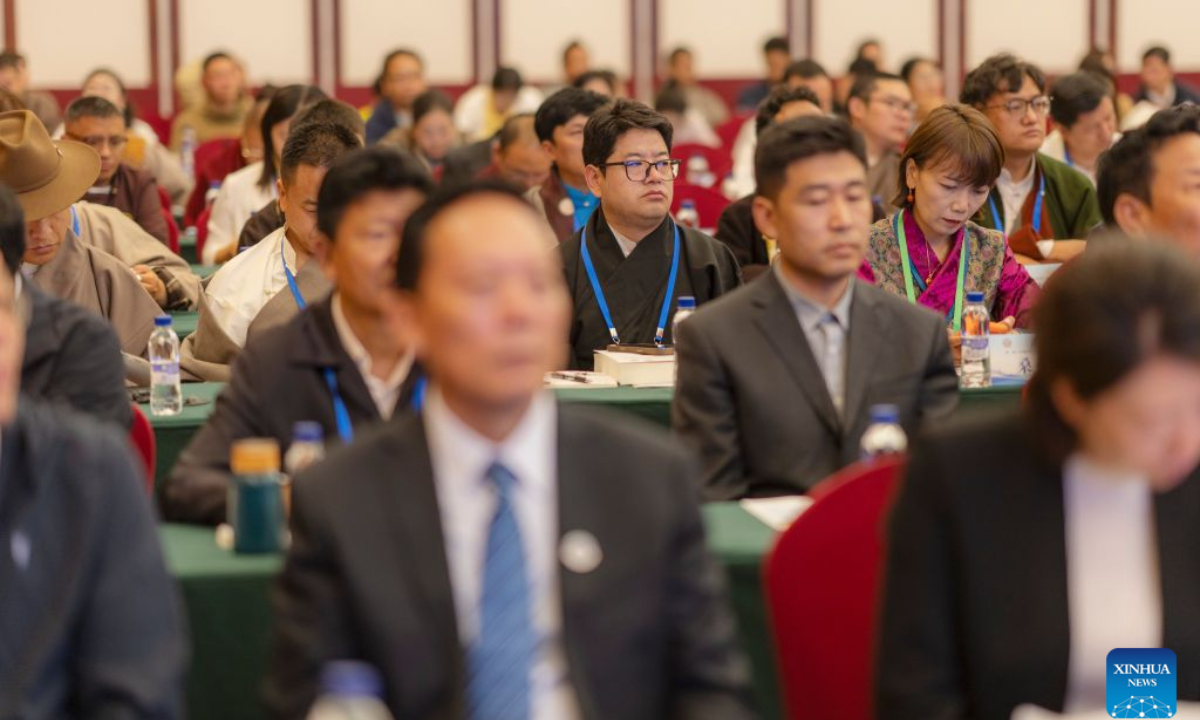
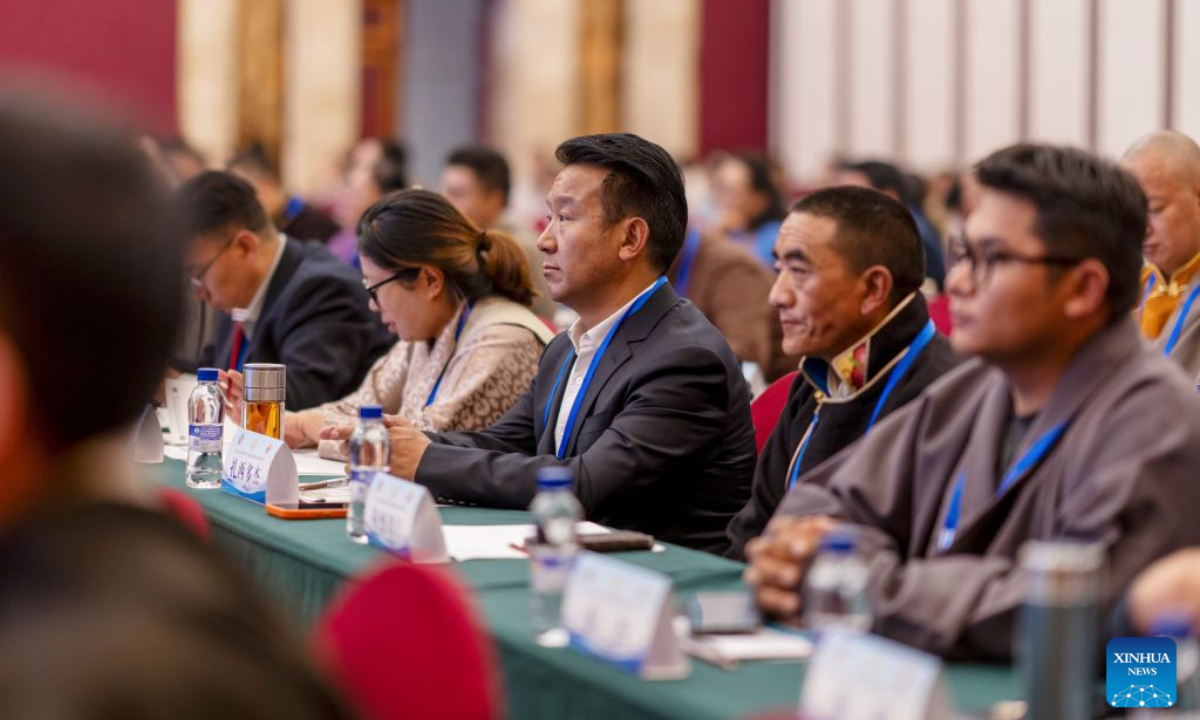
Held in the regional capital Lhasa, the second international academic symposium on "The Four Treatises of Tibetan Medicine" and Tibetan medical thangkas brought together more than 200 experts from China, Britain, Germany, Austria, Mongolia and Nepal.
Discussions centered on the historical evolution of the classic treatises, the iconographic interpretation of Tibetan medical thangkas, and pathways for modern clinical application and international cooperation.
At the symposium, a research center for Tibetan medical thangkas was inaugurated.
Written between the 8th and 12th centuries, "The Four Treatises of Tibetan Medicine" is the most influential foundational work on traditional Tibetan medicine. It was inscribed on the UNESCO Memory of the World Register in 2023.
Based on the work, the 80-scroll Tibetan medical thangkas serve as a visual teaching complement, covering diagnostics, pharmacology, preventive care and medical ethics. The medical thangkas were added to China's national documentary heritage list also in 2023.
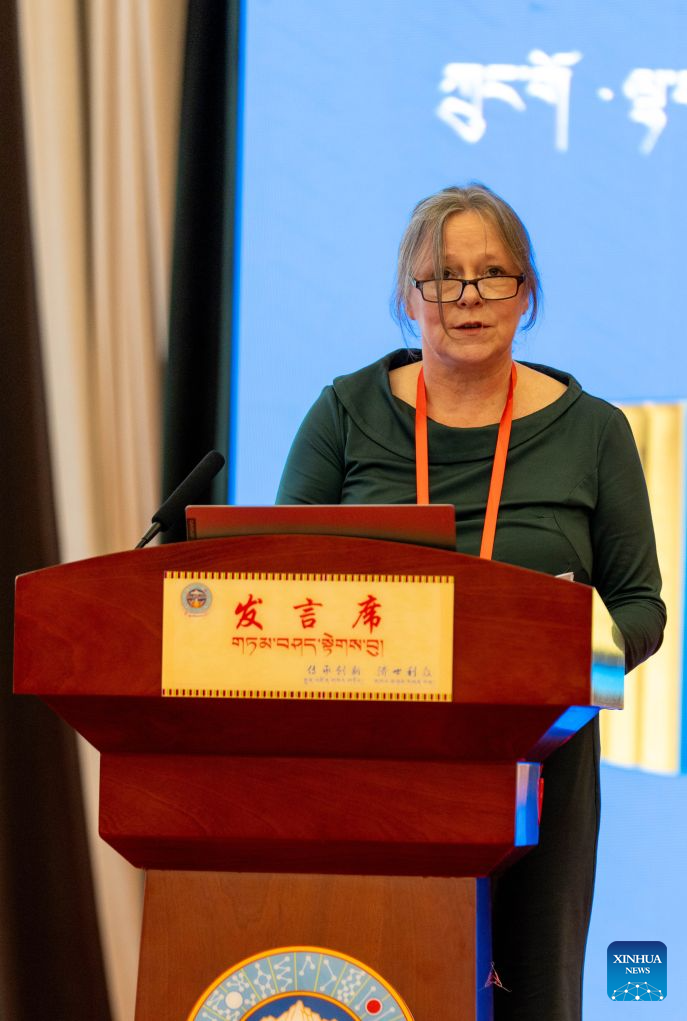
Among the participants was Katharina Anna Sabernig, a lecturer from the Medical University of Vienna, Austria, who first encountered Tibetan medical murals at Labrang Monastery in Gansu Province in 1994. She later returned and began delving deeper into the works.
"I saw these murals and I started to get deeper and deeper and to understand all this," Sabernig recalled.
Mary Caroline Wyatt, a scholar with dual British-Greek citizenship, began collaborating on an English translation of texts about Tibetan medical thangkas last September. She noted that complete English versions have long been scarce.
"Our translations target professional readers so that we preserve many specialized, traditional terms," said Wyatt.
The event was hosted by the regional health commission and co-organized by the regional Tibetan medicine hospital and Xizang University of Tibetan Medicine.
Xizang has formulated and implemented a series of policies on promoting Tibetan medicine and encouraging innovation. According to a government white paper released last year, the region has 51 public Tibetan medicine institutions, employing 5,287 professionals and operating 3,260 beds, up from 28 institutions, 2,232 professionals and 1,364 beds in 2012.
In April, China rolled out its first national recommended standard for ethnic-medicine disease classification and codes for Tibetan medicine.
Tsering, president of the regional Tibetan medicine hospital, said inscriptions on the UNESCO Memory of the World Register and China's national documentary heritage list have brought Tibetan medicine to a broader global audience.
"We will make the most of these opportunities to promote academic exchanges and clinical collaboration worldwide," Tsering said.
。

B | 在玉林市陆川县珊罗镇大山村的育秧基地里,郑志文和哥哥郑志威在田间忙碌,查看秧苗长势。8月13日,郑志文(左)和哥哥郑志威在田间忙碌,查看秧苗长势。中新社记者 蒋雪林 摄 2016年8月,来自台湾苗栗的郑家兄弟受邀来到大山村,创办玉林市志威农业有限公司,从事育秧和机械化插秧。

C | 大学主修化学的郑志文,从此成了一名大陆“农民”。

D | 凭借高品质的育秧技术和机械化插秧服务,公司迅速打开市场。2017年春育秧仅2000亩,2018年增至6000亩,2022年突破3万亩。2025年公司产值达915万元人民币,吸纳周边村屯劳动力71人。

E | 十年间行业竞争日趋激烈。郑志文说,十年前市场空白、利润高;如今从业者增多,单价利润被压缩。“但我们机械化程度高,成本比别人低,价格有优势;育秧技术经验丰富,秧苗品质好,回头客多。

F | ” 目前玉林同类企业约七八家,郑志文并不担心竞争。“公司单季最大服务面积2万至2.5万亩,相当于一个乡镇的种植体量。台湾一个乡镇就有二三十家育秧企业,市场依然良性运转,这里仍有很大空间。

G | ” 企业真正的痛点是用工。广西插秧旺季仅两个月,农机手每年都换人,作业质量参差不齐。“大陆地域辽阔,南北各省区水稻种植有明显时间差。要让农机手有较长的作业周期,必须向北拓展。”郑志文说,公司在江西及四川找到了合作伙伴,打通了跨省作业链条。 “3月初广西插早稻,清明后到江西,5月中旬到四川,7月回流广西插晚稻,农机手有效作业时长从2个月延长至6个月,年收入可达9万元。有了稳定的农机手,插秧质量才有保障,企业才有竞争力。

H | ”郑志文说。 如今,兄弟俩已融入当地。郑志文在玉林找到了女朋友,他笑称已是“半个广西人”。2026年,公司计划增设大米深加工生产线,进一步延伸产业链。 从台湾苗栗到广西,再到江西和四川,这株跨越海峡的“秧苗”,在大陆广袤的稻田里扎根、抽穗,兄弟二人追着稻浪一路向前。

I |
Current article:http://gqpay.cousizhegaobaolengkuo.bond/news/20260826_25903.html
Published on:20:55:12
 Climate change sees IOC aim to choose 2030 and 2034 Olympics hosts at same time
 Former Dollar General CEO Vasos is back and Wall Street cheers. Shares up sharply
 巴莱巴社媒告别布莱顿:感谢大家的照顾,我将永远铭记于心
 Young people from China, France donate WWII archives to Yunnan museum to safeguard history
 '장기 배치 탈진' 논란 美항모 링컨함, 내주 태국 기항
 High-tech and high-value goods power exports
 (W.E. Talk) Green architecture: building bridges between the East and West, without crossing the limits of our planet
 内马尔亲自招募!乌拉圭后卫:和他交谈是一种荣幸,我很感谢他
 小柿子满架 种植户开心
 PM and others mourn Mulayam Singh
 Brussels shooter who killed 2 soccer fans in 'act of terrorism' shot dead: Sources
 Juveniles charged with dousing acid on playground slides that injured 4 children