
武林外传
匈牙利樱桃、塞尔维亚蓝莓和法国猪肉都在奔向中国餐桌_我的网站

一 |
匈牙利鲜食樱桃、塞尔维亚蓝莓和更多法国猪肉类产品正在奔赴中国消费者餐桌。 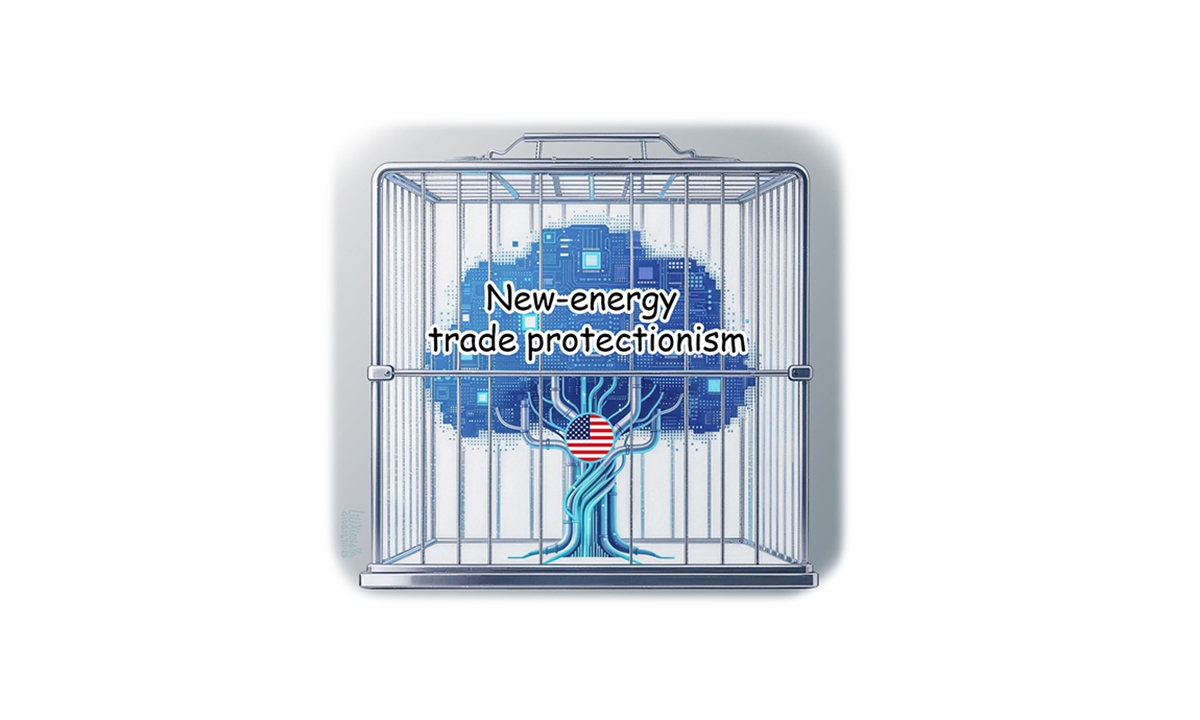
Recent media reports have questioned whether a natural gas plant built to power an Amazon data center project in Texas could become the largest climate polluter in the US. The controversy, whatever the eventual outcome, offers a reality check for America's artificial intelligence (AI) drive.
It exposes a growing contradiction: The US is racing to expand its AI capabilities, yet its protectionist trade policies are making it harder and more costly to access some of the clean-energy technologies needed to sustain that expansion. This raises a broader question: Can an energy-intensive AI race afford the costs of renewable energy protectionism?
The US is entering a new era of rising electricity demand. Data centers, the backbone of the AI economy, are emerging as one of the fastest-growing sources of power consumption. Much of that demand is still being met by fossil fuels: The International Energy Agency reports that natural gas supplies more than 40 percent of the electricity used by data centers in the US, making it their largest source of power.
So, it's not surprising that the expansion of data centers has raised concerns over their environmental impact and the pressure they could place on local power systems and electricity bills. A Gallup survey conducted in March found that seven in 10 Americans opposed the construction of AI data centers in their local area, including 48 percent who strongly opposed such projects.
The findings point to a broader challenge for the US: The race to develop AI is increasingly becoming a race to meet growing energy needs. Addressing this challenge will require more than advances in computing technology; it will also depend on an energy system capable of delivering large amounts of reliable, affordable and cleaner power. That, in turn, will require faster development and broader deployment of clean-energy technologies, from solar power to energy storage.
Yet in the clean-energy sector, the US has increasingly relied on protectionist trade measures that limit access to cost-competitive products from global markets. The country has placed greater emphasis on expanding domestic manufacturing capacity, but rebuilding entire clean-energy supply chains at home is a costly and time-consuming process. Even if expanded domestic production is achieved, it is likely to come at a higher cost, making the deployment of renewable technologies more expensive and potentially slower.
The solar industry offers a clear illustration of this policy direction. The US has continued to expand trade barriers in the sector. Reuters reported that the US government announced on Thursday a series of price floors and a 15 percent tariff on products made from polysilicon, a raw material used in solar panels.
The challenge lies in the limited scale of the US polysilicon industry. Reuters reported that the country has two polysilicon factories. Against this backdrop, relying on domestic polysilicon production while restricting access to imports runs counter to the goal of expanding solar power in the US. The country risks creating barriers that ultimately constrain its own access to the global supply chains needed for growth.
The pressing issue for the US is the speed at which new power demand is emerging. The expansion of data centers is creating electricity needs that cannot wait for domestic clean-energy capacity to develop gradually. Global supply chains can provide the scale and speed required in the near term. By narrowing access to these sources, the US risks turning clean-energy policy into a drag on the infrastructure needed for its AI race.
The US has placed AI high on its economic and technological agenda. The outcome of this race will matter greatly, as financial markets are also watching whether America can turn its AI efforts into commercial success.
This leaves the US with a difficult choice: Can it afford the cost of clean-energy protectionism while racing to build AI infrastructure? The answer may be no. Trade barriers that limit access to competitive renewable technologies could ultimately become a constraint on the AI expansion that Washington is seeking to accelerate.
The author is a reporter with the Global Times. [email protected]
。
Recent media reports have questioned whether a natural gas plant built to power an Amazon data center project in Texas could become the largest climate polluter in the US. The controversy, whatever the eventual outcome, offers a reality check for America's artificial intelligence (AI) drive.
It exposes a growing contradiction: The US is racing to expand its AI capabilities, yet its protectionist trade policies are making it harder and more costly to access some of the clean-energy technologies needed to sustain that expansion. This raises a broader question: Can an energy-intensive AI race afford the costs of renewable energy protectionism?
The US is entering a new era of rising electricity demand. Data centers, the backbone of the AI economy, are emerging as one of the fastest-growing sources of power consumption. Much of that demand is still being met by fossil fuels: The International Energy Agency reports that natural gas supplies more than 40 percent of the electricity used by data centers in the US, making it their largest source of power.
So, it's not surprising that the expansion of data centers has raised concerns over their environmental impact and the pressure they could place on local power systems and electricity bills. A Gallup survey conducted in March found that seven in 10 Americans opposed the construction of AI data centers in their local area, including 48 percent who strongly opposed such projects.
The findings point to a broader challenge for the US: The race to develop AI is increasingly becoming a race to meet growing energy needs. Addressing this challenge will require more than advances in computing technology; it will also depend on an energy system capable of delivering large amounts of reliable, affordable and cleaner power. That, in turn, will require faster development and broader deployment of clean-energy technologies, from solar power to energy storage.
Yet in the clean-energy sector, the US has increasingly relied on protectionist trade measures that limit access to cost-competitive products from global markets. The country has placed greater emphasis on expanding domestic manufacturing capacity, but rebuilding entire clean-energy supply chains at home is a costly and time-consuming process. Even if expanded domestic production is achieved, it is likely to come at a higher cost, making the deployment of renewable technologies more expensive and potentially slower.
The solar industry offers a clear illustration of this policy direction. The US has continued to expand trade barriers in the sector. Reuters reported that the US government announced on Thursday a series of price floors and a 15 percent tariff on products made from polysilicon, a raw material used in solar panels.
The challenge lies in the limited scale of the US polysilicon industry. Reuters reported that the country has two polysilicon factories. Against this backdrop, relying on domestic polysilicon production while restricting access to imports runs counter to the goal of expanding solar power in the US. The country risks creating barriers that ultimately constrain its own access to the global supply chains needed for growth.
The pressing issue for the US is the speed at which new power demand is emerging. The expansion of data centers is creating electricity needs that cannot wait for domestic clean-energy capacity to develop gradually. Global supply chains can provide the scale and speed required in the near term. By narrowing access to these sources, the US risks turning clean-energy policy into a drag on the infrastructure needed for its AI race.
The US has placed AI high on its economic and technological agenda. The outcome of this race will matter greatly, as financial markets are also watching whether America can turn its AI efforts into commercial success.
This leaves the US with a difficult choice: Can it afford the cost of clean-energy protectionism while racing to build AI infrastructure? The answer may be no. Trade barriers that limit access to competitive renewable technologies could ultimately become a constraint on the AI expansion that Washington is seeking to accelerate.
The author is a reporter with the Global Times. [email protected]
。
9日,海关总署发布公告表示,根据我国相关法律法规和中华人民共和国海关总署与匈牙利农业部关于匈牙利鲜食樱桃输华植物检疫要求的规定,即日起,允许符合相关要求的匈牙利鲜食樱桃进口。
8日,海关总署发布公告称,根据我国相关法律法规和中华人民共和国海关总署与塞尔维亚共和国农业、林业和水利部关于塞尔维亚鲜食蓝莓输华植物检疫要求的规定,即日起,允许符合相关要求的塞尔维亚鲜食蓝莓进口。
7日,外交部网站发布《中法关于农业交流与合作的联合声明》(下称“联合声明”)称,中法两国愿持续加强农业食品合作,法方表示赞赏中方于2023年4月提出的“从法国农场到中国餐桌”全链条快速协同机制,并对由高致病性禽流感区域化合作协议为禽类产品市场准入和安全提供保障、扩大输华猪肉产品清单至猪内脏以及签署猪源性蛋白饲料议定书表示欢迎。
对外经济贸易大学法国经济研究中心主任、巴黎索邦大学博士生导师赵永升对第一财经记者表示,中法之间此前在地理标志合作议定书方面加强了合作,法方还提出了“从法国农场到中国餐桌”全链条快速协同机制,从贸易结构上看,中国加大法国农产品进口,有利于更好实现中法贸易平衡。
10日,外交部网站发布《中国和匈牙利关于建立新时代全天候全面战略伙伴关系的联合声明》。
双方认为,中匈农业合作富有潜力,双方在中国中东欧国家农业合作机制下合作进展良好。
双方将充分发挥中匈农业高级别工作组等机制作用,加强中匈农业企业间经贸投资合作,扩大市场准入,推动“小而美”项目合作,强化动物卫生、农产品深加工技术联合研发等领域合作。双方同意建立主管部门间工作组,加强动物疫病区域化管理技术交流,开展机制性对话,力争早日在动物疫病区域化管理方面签署合作协议。
据悉,此次中国和匈牙利在农产品进出口方面签署了三项文件,分别是《中华人民共和国海关总署与匈牙利农业部关于进出境动植物检疫合作谅解备忘录》、中华人民共和国海关总署与匈牙利农业部关于中国从匈牙利输入牛精液的检疫和卫生要求议定书》以及《中华人民共和国海关总署与匈牙利农业部关于匈牙利鲜食樱桃输华植物检疫要求议定书》。
在9日海关总署发布的关于进口匈牙利鲜食樱桃植物检疫要求的公告中,公示了严格的出口前管理,譬如在果园管理中,公告显示:“针对葡萄花翅小卷蛾,匈方须对葡萄花翅小卷蛾进行监测,从樱桃盛花期至收获期,用视觉检查及诱捕器在注册果园进行监测,诱捕器的设置密度为注册果园内每公顷至少2个,每两周检查一次。

二 | 一旦监测到葡萄花翅小卷蛾,必须进行有效防治,未采取有效控制措施的果园将被取消下一出口季的出口资格。”
另据央视新闻报道,当地时间5月8日中午,中方宣布包括“中方愿扩大进口塞尔维亚特色优质农产品,双方已经完成李子干、蓝莓输华手续,并解除对塞尔维亚高致病性禽流感疫情禁令”在内的中方支持新时代中塞命运共同体建设的首期6项务实举措。
北京外国语大学欧盟与区域发展研究中心主任崔洪建对第一财经记者表示,从2012年启动中国-中东欧国家合作机制以来,中国对中东欧的需求或关注主要是从地缘经济合作的角度出发。
他解释道:“中东欧国家是欧洲单一市场的新兴经济部分。

三 | 对于中国企业和投资者来说,与中东欧国家共同成长的空间更大。因此,无论是在贸易、投资还是产业合作方面,我认为未来中国方面将继续加大对中东欧国家的投入。毕竟,在欧盟自身的产业布局中,中东欧国家作为新兴经济体的潜力也备受重视。”
当地时间7日,法国农业部在一份声明中表示:“与中国海关总署签署的两项市场准入协议,使法国的新产品有可能进入中国市场:猪肉内脏,这要归功于对猪肉出口议定书的修订,猪源性蛋白饲料(也将进入中国市场)。”
在2023年5月11日,海关总署发布公告称:“即日起,允许符合相关要求的法国猪肉进口。

四 | ”
据法方统计,中国是法国最大的猪肉出口市场。法国猪肉跨行业协会Inaporc和Culture Viande在一份声明中说“该协议将对出口产生立竿见影的效果”。

五 | 据该协会统计,2023年法国猪肉对华出口额为2.6亿欧元。
在涉及猪源性蛋白饲料方面,7日,海关总署发布公告显示,根据我国相关法律法规和中华人民共和国海关总署与法兰西共和国农业和粮食主权部关于法国猪源性蛋白饲料输华检疫和卫生要求的规定,即日起,允许符合相关要求的法国猪源性蛋白饲料进口。
海关总署表示,本公告中的猪源性蛋白饲料包括肉粉、骨粉、肉骨粉、血粉、血浆蛋白粉,血液制品如喷雾干燥的血浆粉和血红蛋白粉等。
此次中法两国还发布了《中法关于农业交流与合作的联合声明》。在其中,双方欢迎通过签署关于葡萄种植和葡萄酒酿造产业合作的行政协议和续签关于地理标志合作议定书加强合作。
同时,双方愿继续积极探讨在确保安全基础上,彻底解除对无牛海绵状脑病牛肉产品的禁运。两国还将继续就脱水苜蓿市场准入开展对话。

六 | 双边合作还将扩展到兽医领域和进口食品的卫生监管。

七 |
赵永升对记者表示,农业领域是中法两国经贸合作中的直接受益者。考虑到目前中法之间的贸易结构,中方有空间容纳法国的农业出口,譬如葡萄酒、黄油、以及大量农副产品。“法国毕竟是一个农业大国”。
Current article:http://gqpay.cousizhegaobaolengkuo.bond/news/20260826_17277.html
Published on:09:31:39
最新文章
- 直播海报:国新办就全力抓好“十五五”规划实施,加快推进新型工业化有关情况举行发布会,直播海报:国新办就全力抓好“十五五”规划实施,加快推进新型工业化有关情况举行发布会
- 打球难、约人烦、凑局累 一个免费工具撬动数千万运动用户
- 北京发布2026年各项社保缴费工资基数上下限,北京发布2026年各项社保缴费工资基数上下限
- #活力中国调研行|“5A级菜市场”靠什么爆火?淄博烧烤只是这里的开场白,烟火气、人文味才是核心。#新华每日电讯
- 大风大雨 富阳余杭泄洪会影响下游吗?
- 国外媒体:三星S10可能不会带来更快的充电技术
- Chinese bank to help Turkish enterprises tap into business opportunities at the Canton Fair
- 政声直达丨河北因地制宜培育壮大乡村特色优势产业
- Rashmika Mandanna Soaks in The Christmas Spirit
- 昨天萧山机场取消航班388架次 今明两天仍有多趟列车停运
标签云
热门文章
- 国家发展改革委召开“六张网”重大项目协调调度机制会 完善“六网协同”工作推进机制
- A股收评:三大指数集体收涨,超2800只个股飘绿,A股收评:三大指数集体收涨,超2800只个股飘绿
- China, Indonesia to hold exercise east of Taiwan island in mid-August, first such drill carries ‘great significance’
- 队报:里昂vs圣埃蒂安边裁被硬币砸中,比赛一度中断超过40分钟
- 保时捷柏林之声音响将用上氮化镓,令低音炮更小、更轻、更高效
- 政声直达·热点快评|从保定的地道桥到国家大剧院:普通人的声音才是时代最响亮的BGM
- 共计5668台/制动控制模块软件存偏差 沃尔沃旗下部分车型遭召回
- 哈里梅根英国“偷摸”会合后,开始西非皇家之旅,梅根穿了露背装
- “我可以再次赢你”,拜登向特朗普发起辩论挑战,特朗普:准备开战
- Shandong-Africa cultural gala opens in Jinan, Shangdong